Objective
A respected English-language daily newspaper enlisted the guidance of Cambridge Analytica to better understand their subscriber base and to derive actionable insights for subscription, engagement, renewal, and retention of customers.
Solution
Cambridge Analytica ingested millions of subscriber records from the client’s database, matched the records and enriched it with deep pools of demographic, product affinity and expenditure data. Using sophisticated statistical and predictive analytics techniques, a detailed comparison of different audience types was performed.
The audience comparisons included:
- The newspaper subscribers vs. general population
- Standard vs. premium product
- Print vs. digital
- Male vs. female
- Different engagement clusters
- Long term subscribers vs. subscribers with early termination
The detailed analysis focused on the use of demographic data (age, gender, ethnicity), income, wealth, education, location, profession, and lifestyle.
Result
The dominant distinguishing features and similarities extrapolated from each comparison were identified, from which highly impactful insights and recommendations were made, including:
- Geographic growth opportunities (Fig. 1)
- Identification of standard subscribers with upsell potential to premium products
- Driving subscriber engagement through a content recommendation system
- Tailored incentive schemes based on consumer preferences
- Improving retention through gender differentiation
- Informing future strategy and product adjustments using inverse trends across print vs digital subscribers
- Reducing churn based on engagement scores (Fig. 2)
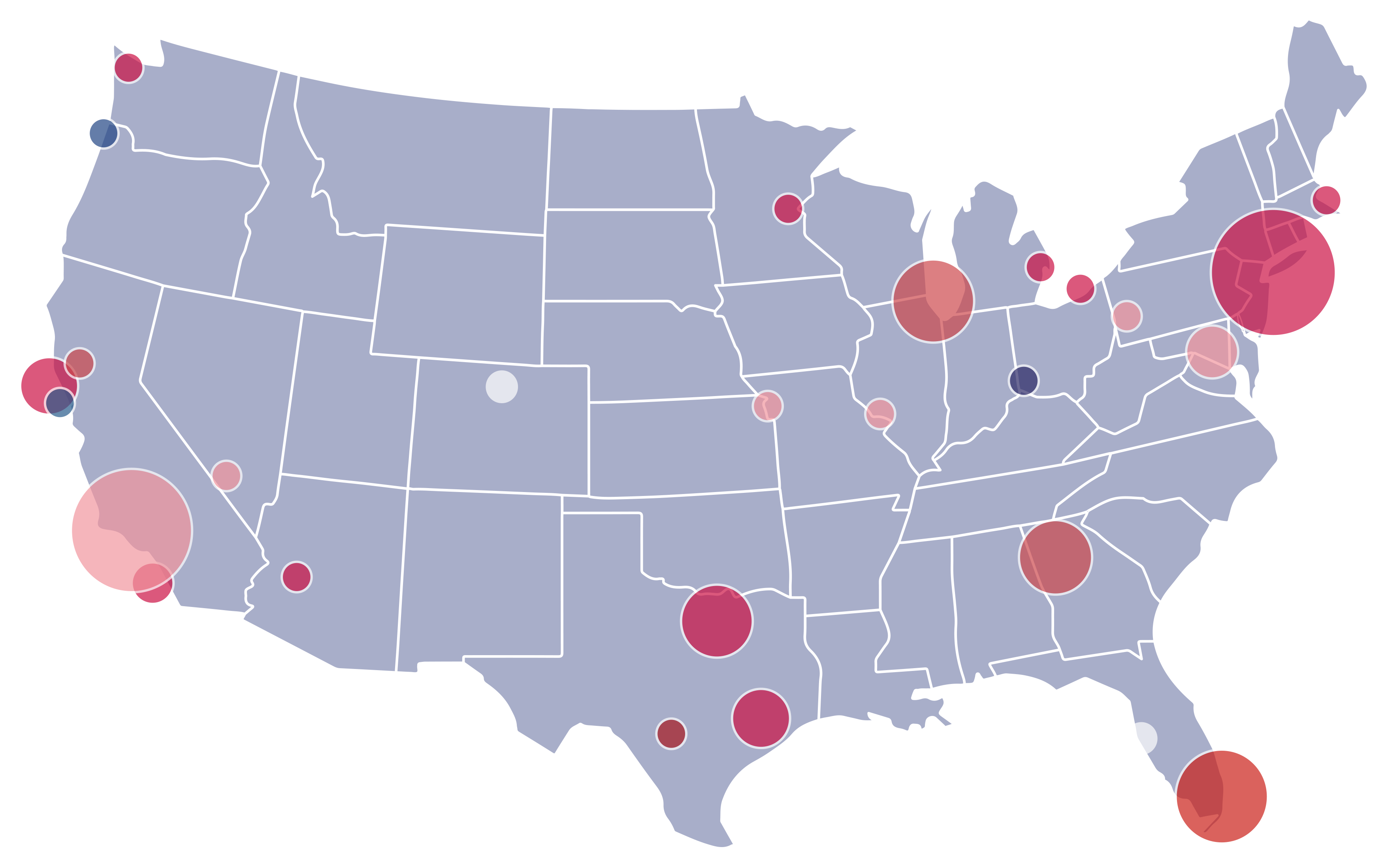
Figure 1: Geographic growth opportunity; the circle size indicates the market size and the colour indicates the growth potential.
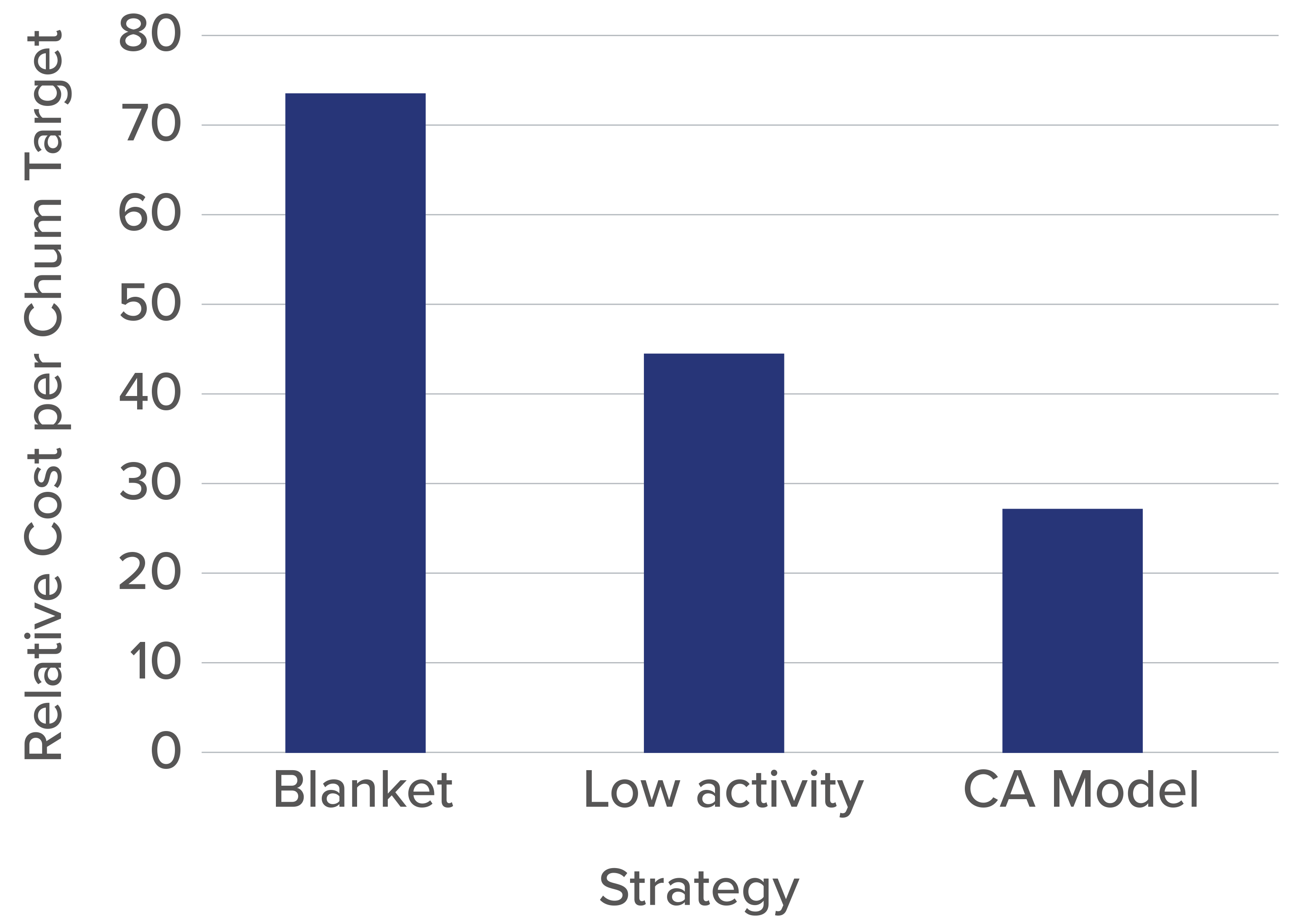
Figure 2: Churn reduction based on engagement scores: comparison of different strategies. The prototype machine learning model developed by us leads to 42% cost reduction compared to the ‘Blanket’ approach (no prior knowledge).